
Featured Guide: Your Expat Tax Filing Journey

A simple, step‑by‑step overview of how we guide you from start to finish.
Your expat tax filing journey with us is designed to feel clear, calm, and predictable. From the moment you get started, we walk you through each step so you always know what’s happening next. You’ll upload your documents securely, we’ll prepare your return with care, and you’ll receive clear updates along the way. No guesswork, no confusion — just a smooth, guided experience from beginning to end.
What Documents You Need

A short, practical checklist to help you gather everything before we begin.
You don’t need a stack of paperwork to get started. Most clients only need a few key documents, and we’ll tell you exactly what applies to your situation. If you’re missing something, that’s completely normal — we’ll help you figure out the best way to move forward. Our goal is to make this step simple and stress‑free.
1. Identity & Basic Info
- Passport (photo page)
- U.S. Social Security Number or ITIN
- Current foreign address and phone number
- Dates you lived abroad during the tax year
2. Income Documents
- U.S. income forms (W‑2, 1099‑NEC, 1099‑INT, 1099‑DIV, 1099‑K, etc.)
- Foreign employer pay statements or annual wage summaries
- Self‑employment income records (invoices, bookkeeping summaries)
- Foreign pension or social security statements
- Investment income statements (U.S. or foreign)
3. Foreign Bank & Financial Accounts
- Bank names and account numbers
- Highest balance for each foreign account during the year
- Foreign investment or brokerage account summaries
- Crypto exchange statements (if applicable)
4. Housing, Family & Life Abroad
- Foreign rental contract or housing cost summary (if claiming housing exclusion)
- Proof of foreign residence (utility bill, registration, etc.)
- Dependent information (names, SSNs/ITINs, birthdates)
5. Deductions & Credits
- Tuition or education expenses (U.S. or foreign)
- Childcare expenses and provider information
- Charitable contributions
- Medical insurance or ACA marketplace forms (if applicable)
6. Prior‑Year Tax Info
- Last year’s U.S. tax return (if available)
- Any IRS letters or notices
What Happens After You File
After your return is filed, we continue to support you. You’ll receive a copy of your completed return, confirmation of submission, and guidance on any next steps — such as payments, refunds, or record‑keeping. If the IRS sends anything your way, we’re here to help you understand it. Filing isn’t the end of the journey; it’s the beginning of your peace of mind.
Expat Tax Filing Checklist
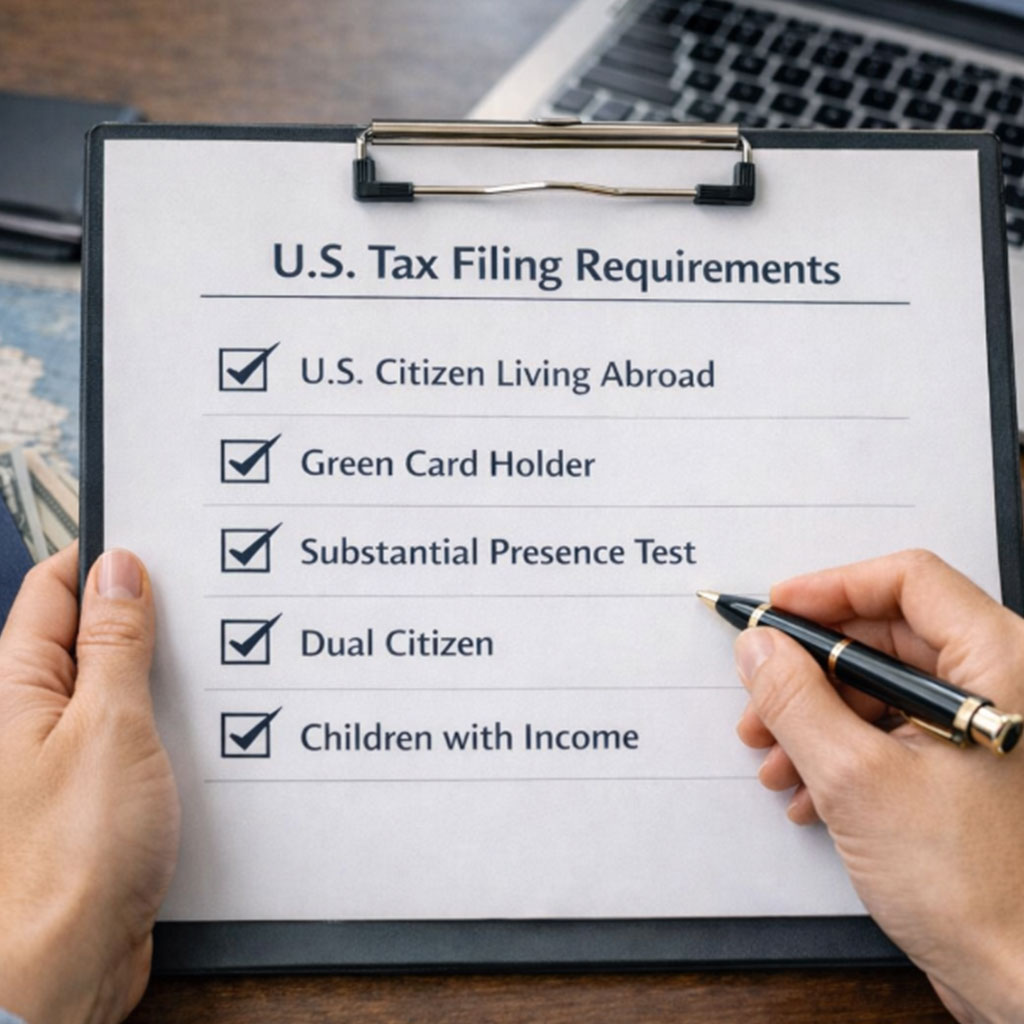
A simple list to help you get ready for the filing process.
This checklist gives you a quick overview of what most expats need to gather before we begin. It includes basic personal information, income documents, and any details related to foreign accounts. You don’t need everything at once — upload what you have, and we’ll guide you through the rest. The goal is to help you feel prepared, not pressured.
1. Confirm Your Filing Status & Residency Position
- Determine if you qualify for the Physical Presence Test or Bona Fide Residence Test
- Confirm your filing status (single, married filing jointly, etc.)
2. Gather Your Required Documents
- Link to the “What Documents You Need” section instead of repeating it
3. Review Your Income Sources
- U.S. wages
- Foreign wages
- Self‑employment income
- Passive income (interest, dividends, rental income)
4. Determine Which Expat Tax Benefits Apply
- Foreign Earned Income Exclusion (FEIE)
- Foreign Tax Credit (FTC)
- Foreign Housing Exclusion/Deduction
5. Check Foreign Reporting Requirements
- FBAR (FinCEN 114)
- FATCA (Form 8938)
- Foreign business ownership (Forms 5471, 8865, etc.)
6. Review Deadlines & Extensions
- June 15 automatic extension
- October 15 extension
- FBAR deadline
7. Final Review Before Filing
- Confirm all income is included
- Ensure foreign accounts are reported
- Upload all documents
- Ask questions if anything is unclear
Foreign Income Documentation Checklist
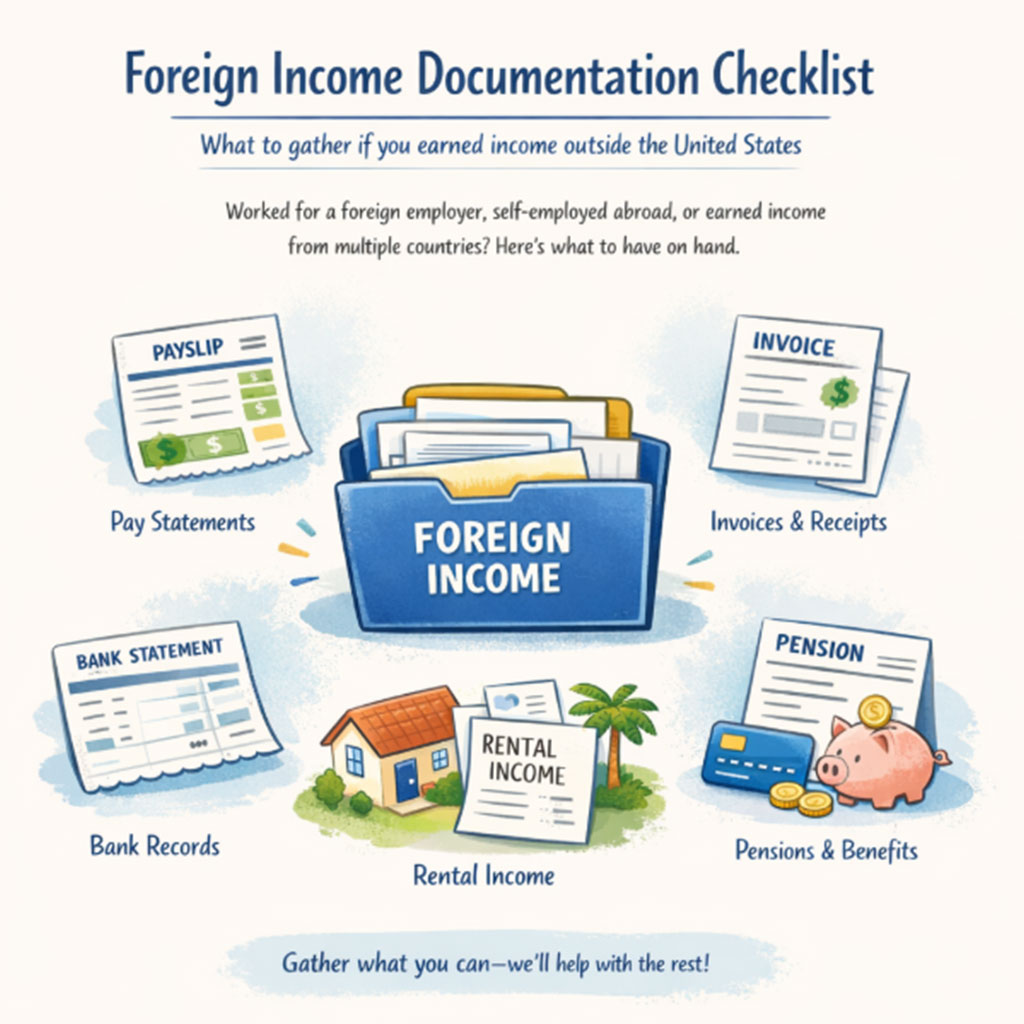
What to gather if you earned income outside the United States.
If you worked for a foreign employer, were self‑employed abroad, or earned income from multiple countries, this checklist helps you understand what documents are helpful. Whether you have formal pay statements or simple summaries, we can work with what you have. This list keeps things straightforward so you know exactly what to look for.
1. Foreign Employment Income
- Annual wage statements from your foreign employer
- Monthly or quarterly pay slips
- Employment contract (if available)
- Bank statements showing salary deposits
- Any tax withheld by the foreign employer
2. Self‑Employment or Freelance Income Abroad
- Invoices issued to clients
- Bookkeeping summaries or spreadsheets
- Payment platform statements (PayPal, Wise, Revolut, etc.)
- Foreign business registration (if applicable)
- Expense receipts for deductible business costs
3. Foreign Investment or Passive Income
- Foreign bank interest statements
- Foreign dividend statements
- Rental income summaries for foreign property
- Local tax statements showing taxes paid on investment income
4. Foreign Pension, Social Security, or Retirement Plans
- Annual pension statements
- Foreign social security benefit summaries
- Employer pension contribution statements
- Withdrawal or distribution records
5. Multi‑Country Income
- Income summaries by country
- Tax paid in each country
- Dates you lived or worked in each location
FBAR Information Checklist
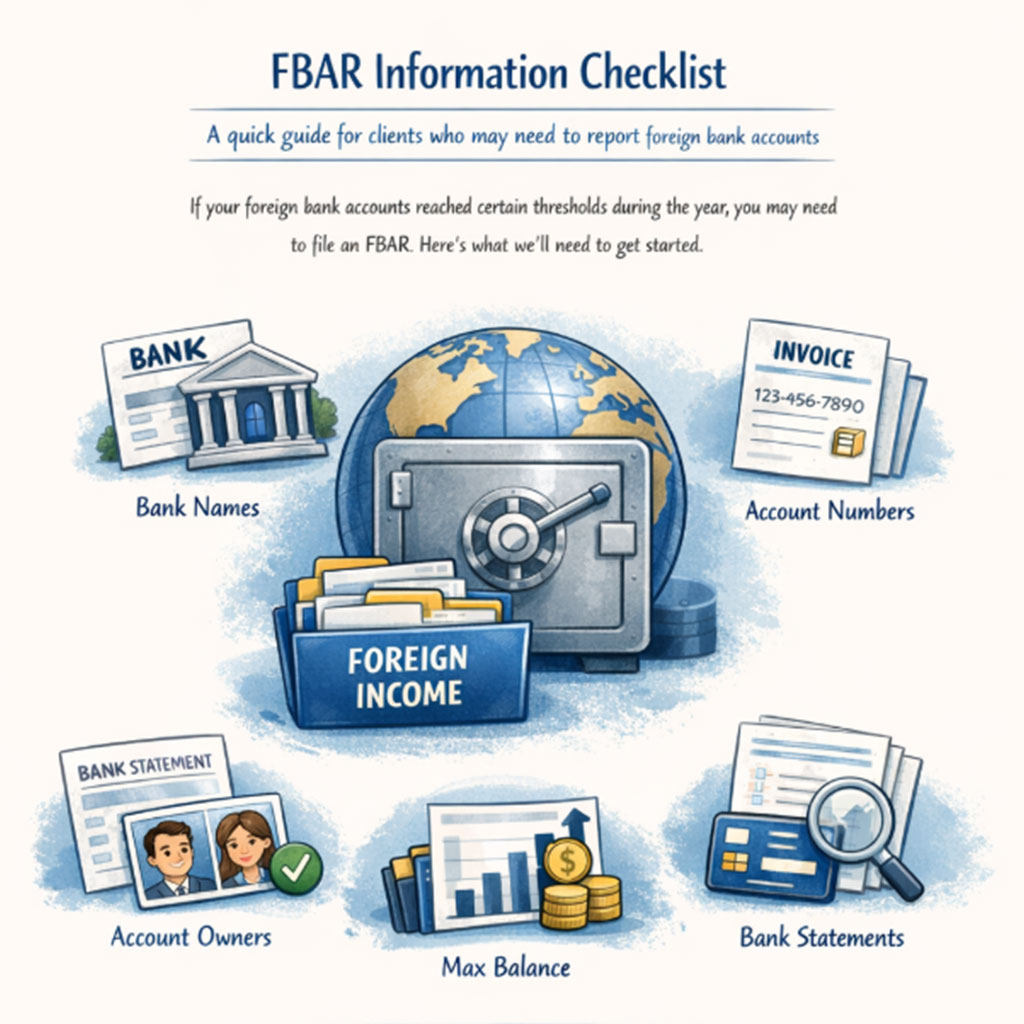
A quick guide for clients who may need to report foreign bank accounts.
If your foreign bank accounts reached certain thresholds during the year, you may need to file an FBAR. This checklist outlines the basic information we’ll need — such as bank names, account numbers, and maximum balances. Most clients find this easier than expected, and we’ll help you determine whether this requirement applies to you.
1. Basic Account Information
- Name of each foreign bank or financial institution
- Country where each account is held
- Account number(s)
- Type of account (checking, savings, investment, etc.)
2. Account Ownership Details
- Name(s) of account holder(s)
- Whether you have signature authority or joint ownership
- Relationship to other account holders (if any)
3. Account Balances
- Highest balance during the year (in local currency)
- Date when the highest balance occurred
- Currency used and approximate USD conversion (we’ll help with this)
4. Supporting Records
- Year‑end bank statements
- Screenshots or summaries showing balances
- Any local tax forms showing account values
5. Additional Notes (if applicable)
- Accounts closed during the year
- Accounts opened mid‑year
- Foreign investment or brokerage accounts
- Crypto exchange accounts (if held abroad)
Gather what you can — even partial information helps. We’ll confirm whether an FBAR filing is required and handle the technical details for you.
Getting Started
How Our Process Works
Getting started with us is designed to feel easy and predictable. You’ll answer a few simple questions, upload your documents securely, and we’ll take it from there. We review everything carefully, keep you updated, and let you know if we need anything else. You’ll always know where you are in the process, and you’ll never feel rushed or overwhelmed.
How to Upload Your Documents
Simple instructions for securely sharing your information.
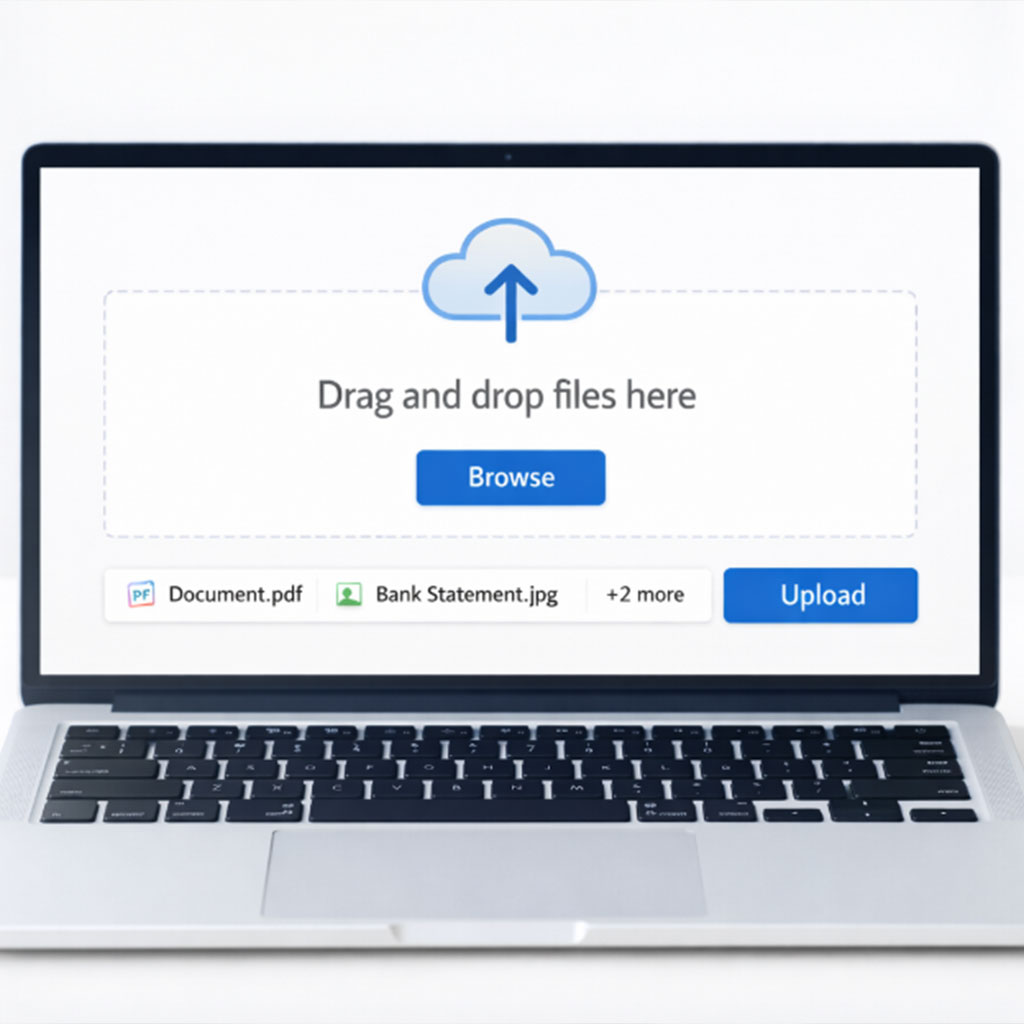
You’ll upload your documents through our encrypted portal, which keeps your information safe and organized. The portal is easy to use — just drag and drop your files or upload them from your device. If you’re missing something, that’s completely fine. Upload what you have, and we’ll guide you through the rest.
What Happens After You File
Once your return is filed, we continue to support you. You’ll receive confirmation, a copy of your return, and guidance on any next steps. If the IRS contacts you, we’re here to help you understand what it means. Filing isn’t the end — it’s the beginning of your peace of mind.
Understanding Your Return

What Is the Foreign Earned Income Exclusion (FEIE)?
A simple explanation of how FEIE may reduce your U.S. tax burden.
The Foreign Earned Income Exclusion (FEIE) may allow you to exclude a portion of your foreign income from U.S. taxation if you meet certain residency or physical‑presence requirements. We’ll determine whether you qualify and explain how it affects your return in clear, straightforward terms. You don’t need to know the rules — that’s our job.
Foreign Tax Credit: What It Means for You

A plain‑English overview of how foreign taxes you’ve paid may help reduce your U.S. tax liability.
If you paid income taxes to another country, you may be able to claim a Foreign Tax Credit (FTC) to avoid being taxed twice on the same income. We’ll calculate this for you and explain how it impacts your return. Our goal is to make sure you receive every credit you’re entitled to, without any confusion.
FBAR: Do You Need to File?
A quick guide to understanding foreign bank account reporting requirements.
If the total value of your foreign bank accounts exceeded certain thresholds at any point during the year, you may need to file an FBAR. This isn’t a tax — it’s simply a reporting requirement. We’ll help you determine whether it applies to you and guide you through the process if it does. Most clients find this step easier than expected.
FAQs

What if I lived in multiple countries this year?
It’s completely fine if you moved between countries. Just let us know where you lived and when, and we’ll take care of the tax implications. We’ll guide you through what we need and make sure everything is reported correctly.
What if I’m behind on my taxes?
You’re not alone — many expats fall behind. In most cases, there are IRS programs that help you catch up without penalties. We’ll review your situation and walk you through the best path forward, step by step.
How do extensions work?
If you need more time, we can help you file an extension. This gives you extra time to submit your return, though any taxes owed are still due by the standard deadline. We’ll explain what applies to you and handle the paperwork.
What if I don’t have all my documents yet?
That’s completely normal. Upload what you have, and we’ll help you figure out what’s missing and how to get it. You don’t need everything on day one — we’ll guide you through the process.